
Fighting Misinformation: Why Media Literacy Is a Critical Skill for the Digital Generation
Introduction
The digital generation has access to more information than ever before. News, opinions, images, and videos can reach
millions of people within minutes. However, speed and accessibility do not guarantee accuracy. Hoaxes and misleading
content can shape public opinion, damage reputations, and influence important decisions. In this environment, media
literacy is no longer optional; it is an essential skill for participating safely and responsibly in digital society.
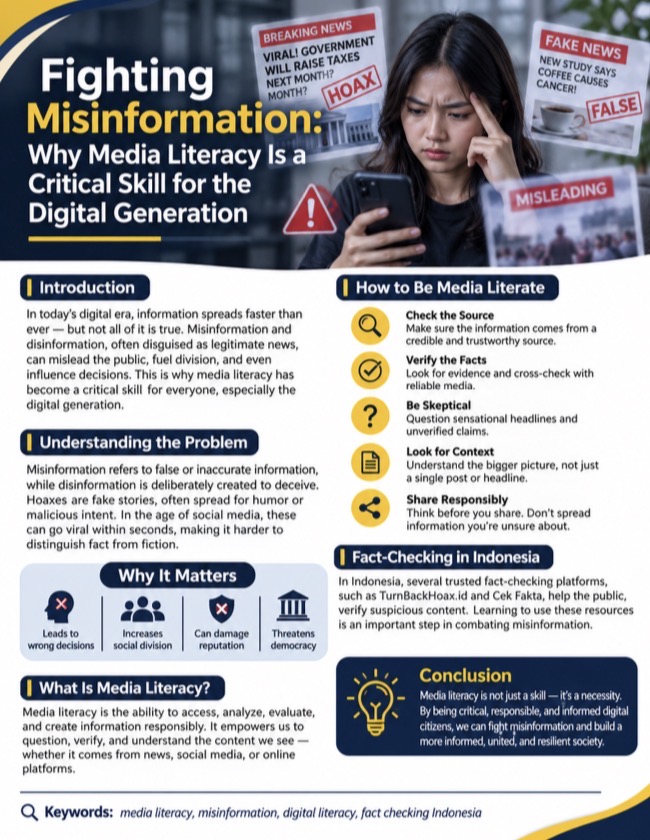
Understanding Misinformation and Disinformation
Misinformation is false or inaccurate information shared without necessarily intending to cause harm. Disinformation, in
contrast, is false information deliberately created or distributed to deceive people. Hoaxes are fabricated or misleading
stories that may circulate as if they were genuine news. Although their intentions can differ, all can spread quickly
through social media, messaging applications, and online communities especially when content triggers fear, anger, or
excitement.
Why Media Literacy Matters
Media literacy is the ability to access, analyze, evaluate, and create media content responsibly. It encourages people to
ask who produced a message, what evidence supports it, what context may be missing, and whose interests it may
serve. Combined with digital literacy, these skills help users recognize manipulated images, misleading headlines,
impersonated accounts, and content designed to attract clicks rather than inform. A media-literate audience is less likely
to become an unwitting channel for false claims.
Fact-Checking: Think Before You Share
Fact-checking begins with simple habits: read beyond the headline, check the original source and publication date, look
for supporting evidence, and compare the claim with multiple credible outlets. For images or videos, use reverse image
search when appropriate and check whether the material has been taken out of context. In Indonesia, readers can
consult initiatives such as CekFakta and the hoax-verification archive TurnBackHoax by MAFINDO. These resources
can help assess viral claims, but users should still examine the evidence and methodology behind each verification.
Ethics in Digital Communication
Responsible digital communication means being accurate, respectful, and aware of the consequences of sharing
information. Users should correct mistakes openly, avoid spreading private information, distinguish facts from personal opinions, and refrain from reposting unverified content even when it supports their own views. Platforms may amplify
sensational material, but individuals remain responsible for the choices they make online.
Conclusion
Fighting misinformation requires more than deleting false posts after they go viral. It requires a culture of curiosity,
careful verification, and ethical participation. By strengthening media literacy, practicing fact-checking, and thinking
before sharing, the digital generation can help build a more informed and trustworthy online environment.
Comments :